How do I know if water has actually reached my subfloor?
The finished floor is usually the last thing to show damage, which is why so many Hunters Pointe homeowners catch this late. You will notice cupping or crowning in hardwood, where the planks lift at the edges or peak in the center. Laminate swells along the seams and the click joints separate. Tile stays put longer, but the grout cracks and individual tiles start to sound hollow when you tap them. Vinyl plank often looks fine on top while the adhesive fails underneath, leaving a soft, shifting feel as you walk across the room.
The clearest sign is smell. A subfloor that has been wet for more than 72 hours starts to produce that distinctive musty, sweet odor. That smell is microbial growth, and it means the wood fibers are already feeding mold. If you also see staining on the ceiling of the room below, or you can press your thumb into the floor and feel it give, the damage is no longer surface level.
A few other tells worth checking before you call us. Baseboards that have separated slightly from the wall or show a darker waterline at the bottom edge almost always mean the subfloor underneath is wet. Nail heads in hardwood that suddenly appear above the plank surface are a sign the wood is shrinking back after a swell cycle. In carpeted rooms, walk the perimeter in bare feet. Cold or damp spots near exterior walls and plumbing chases are usually where the moisture is pooling under the pad.
What causes subfloor water damage in Hunters Pointe homes?
In our service area, the four most common sources are supply line failures under sinks and behind refrigerators, dishwasher and washing machine leaks that go unnoticed for weeks, bathroom subfloor rot from failed wax rings and shower pan leaks, and basement seepage that wicks up into first-floor framing. Older Hunters Pointe neighborhoods with cast iron drain stacks see a lot of toilet flange leaks, while newer builds tend to fail at PEX fittings and braided supply lines.
Storm-driven water is another category entirely. After heavy rain events, we get calls about wind-driven water entering through siding gaps and saturating rim joists and subfloor edges. If that sounds like your situation, our storm damage response team handles the exterior intrusion and interior drying as a single job.
Seasonal patterns matter too. Hunters Pointe Water Restoration sees a spike in frozen pipe failures every January and February, particularly in homes with plumbing routed through exterior walls or unconditioned crawlspaces. Spring brings the basement seepage calls as the water table rises. Summer is appliance season, with ice maker lines and dishwasher supply hoses leading the list. Knowing the typical failure points by season helps homeowners do preventive checks before a small drip becomes a subfloor replacement.
Will my homeowners insurance cover this?
Usually yes, if the cause is sudden and accidental. A burst supply line, an appliance failure, or a pipe that froze overnight are typically covered events. Long-term seepage, gradual leaks that went unnoticed for months, and flood (groundwater rising) are generally excluded. Flood requires a separate NFIP policy.
The phrase your adjuster wants to hear is "sudden discharge." Document everything before you move it. Photos of the source, photos of the damage from multiple angles, and a written timeline of when you first noticed symptoms. We work directly with adjusters on most Hunters Pointe claims and can provide the moisture readings, scope of work, and IICRC documentation they need to approve the job.
Can a wet subfloor be dried, or does it always need to be replaced?
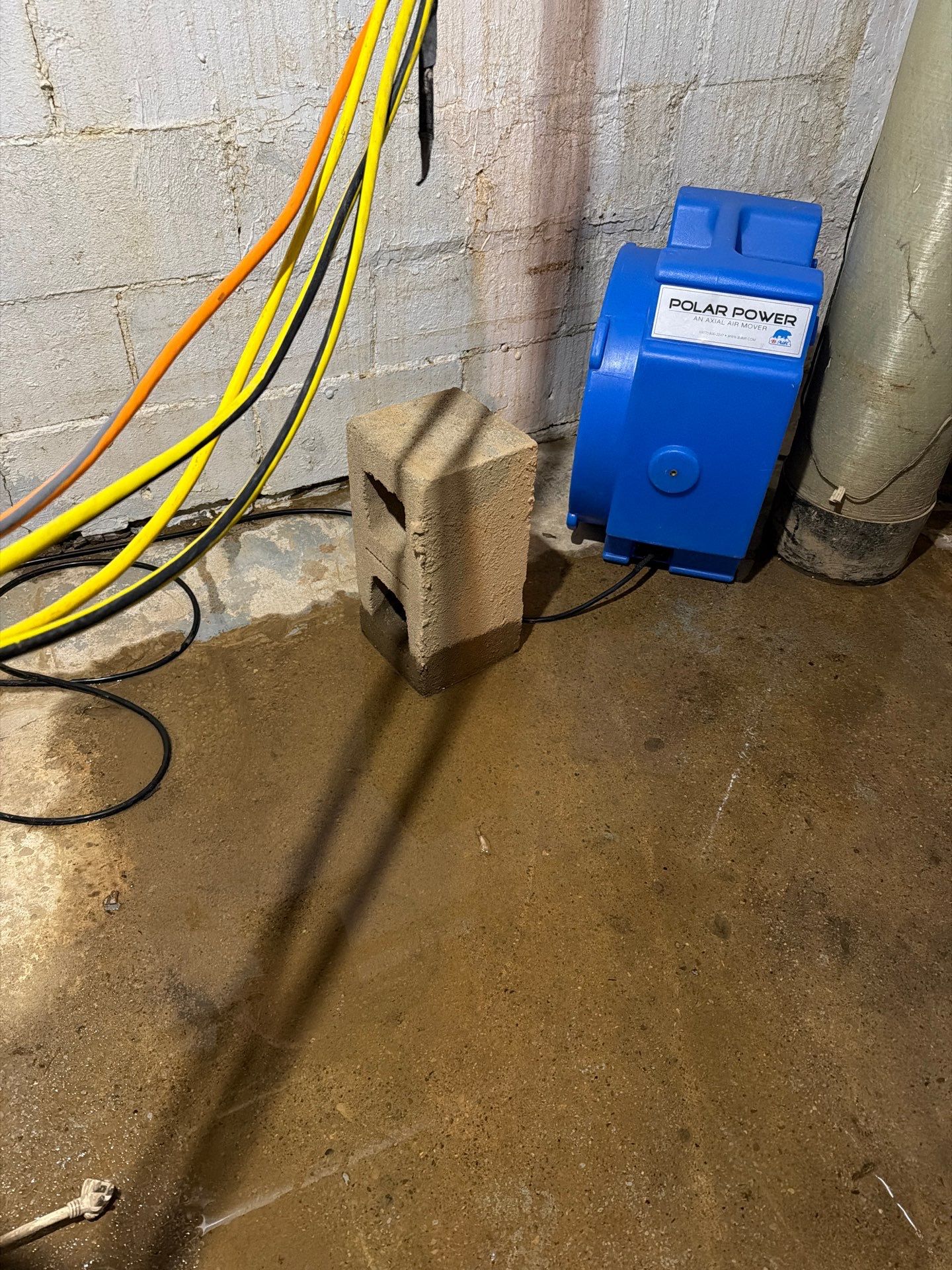
It depends on three things. First, the water category under IICRC S500 standards. Clean water from a supply line (Category 1) can often be dried in place if we catch it within 48 to 72 hours. Grey water from a dishwasher or washing machine (Category 2) is borderline. Black water from a sewage backup or long-standing contamination (Category 3) requires removal, no exceptions. If you suspect sewage involvement, read our guide on Category 3 water removal before touching anything.
Second, how long the wood has been wet. Plywood holds its structural integrity longer than OSB. OSB swells, delaminates, and loses load-bearing strength faster, sometimes in under a week of continuous saturation. Third, moisture content. We use penetrating moisture meters to read the actual percentage of water in the wood. Dry plywood reads around 8 to 12 percent. Anything above 20 percent for more than a few days is at risk for rot and mold colonization.
How long does the whole detection and repair process take?
For a contained leak with healthy subfloor, expect three to five days of drying and one to two days of reinstall. For full subfloor replacement in a single room, plan on seven to ten days from demo to finished floor. Multi-room damage or jobs involving cabinet removal can stretch to two or three weeks. We do not rush the drying phase. If the wood is not dry, the new floor will fail and the mold will come back.
Can I prevent this from happening again?
Yes, and the steps are simple. Replace rubber washing machine hoses with braided stainless steel every five years. Install a water sensor puck under every sink, behind the fridge, and next to the water heater. They cost about $15 each and will text your phone when they detect moisture. Re-caulk tub and shower perimeters annually, and have your wax rings inspected any time a toilet rocks even slightly. For a whole-home solution, a flow-based shutoff valve at the main line will cut water automatically when it detects an abnormal pattern. Hunters Pointe Water Restoration installs these for Hunters Pointe homeowners who have already been through one major loss and do not want a second.
What does subfloor repair actually cost in Hunters Pointe?
Real numbers, based on what we quote across central Indiana. A dry-in-place job where we extract water, set air movers and a dehumidifier, and monitor moisture for three to five days typically runs $800 to $2,200 depending on square footage. If the finished flooring has to come up but the subfloor is salvageable, add $400 to $1,500 for removal and disposal.
Full subfloor replacement, meaning we cut out the damaged plywood or OSB, replace joists if needed, and install new sheathing, runs $35 to $75 per square foot in most Hunters Pointe homes. A standard bathroom subfloor replacement lands between $1,200 and $3,500. A kitchen runs $3,000 to $8,000 once you factor in cabinet removal and reinstall. If joists are involved, add $200 to $600 per joist for sistering or replacement. For a broader cost picture across the full restoration, our complete price breakdown walks through every line item.
A few cost variables that catch homeowners off guard. Tile floors with mud-bed installations cost significantly more to demo than thinset over backer board. Engineered hardwood glued directly to concrete slabs in slab-on-grade homes is essentially destroyed during removal and has to be fully replaced. If the damaged area extends under a load-bearing wall, temporary shoring adds $400 to $900 to the job. Asbestos testing on flooring installed before 1985 is required by Indiana law and adds another $150 to $300 plus any abatement costs if positive.